

Two Scary Halloween Writing Prompts: Faces You Can’t Trust
October 30–31 — The October horror challenge finale
We’re closing October with two scary Halloween writing prompts about recognition.
You know your own face. You know what an empty costume mask should look like.
Tonight, neither offers much reassurance.
These final prompts put your character in situations where looking more closely makes everything worse. Choose an image, set a timer, and begin at the moment an ordinary explanation becomes impossible.
October 30: The Evacuation
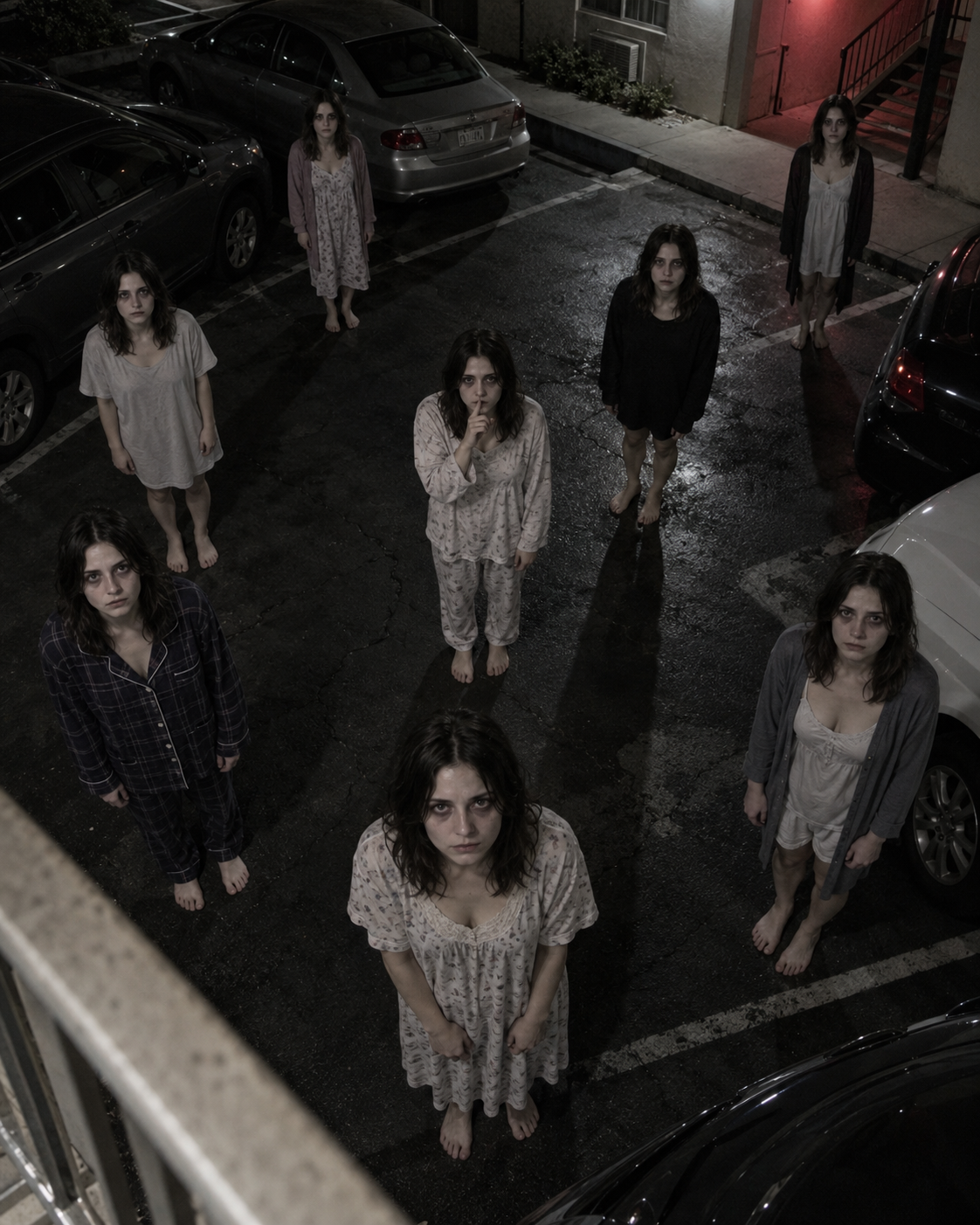
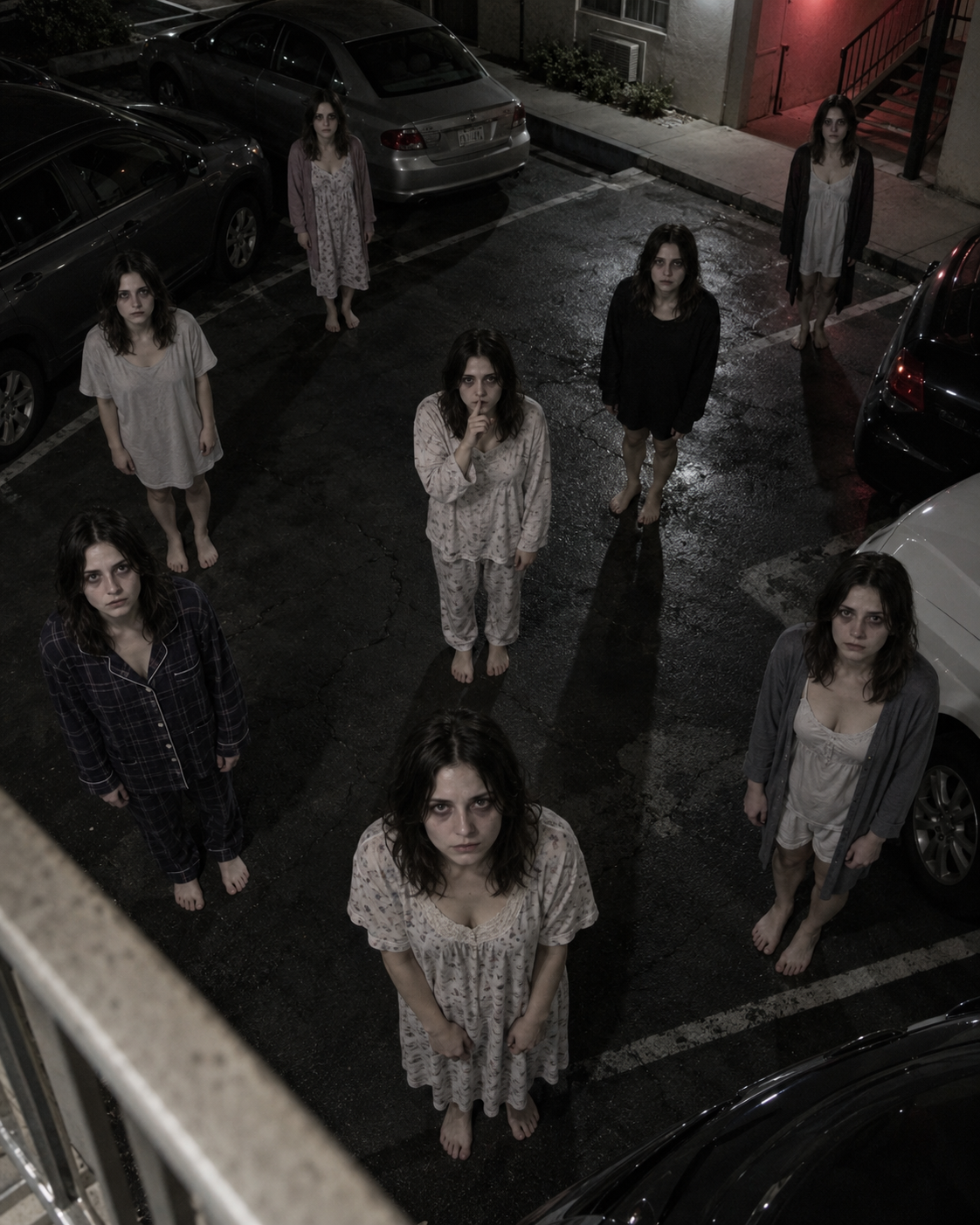
The prompt: An alarm wakes you at 3:06 a.m. Everyone in your apartment building is ordered outside.
You look down from your balcony.
Eight versions of you stand in the parking lot. They wear clothes you recognize. One holds the coat you lost last winter.
Another raises a finger to her lips.
The announcement changes.
“One resident remains. Do not allow it to leave.”
Behind you, your phone unlocks.
You left it on the kitchen counter.
Make the Recognition Personal
Start with one face. Give your character time to question the light or the distance.
Then let them recognize a habit: a thumbnail being bitten, a shoulder held higher than the other, the way someone grips a sleeve when frightened.
Those details suggest the copies know more than your character’s appearance.
Give one duplicate something it should be impossible to possess. The lost coat might still have a receipt in its pocket from the last time your character wore it.
How would the duplicate prove that from three floors below?
Divide Their Attention
The figures outside demand watching. The unlocked phone introduces activity inside.
Let your character investigate one while losing track of the other.
A camera shutter sounds from the kitchen.
When they look back down, seven figures remain.
Choose where the eighth has gone before you write the next moment. Knowing its location will help you place sounds and clues consistently.
Writing exercise: Write 300–500 words from the balcony. Let one duplicate offer useful information. End when following that advice creates a new danger.
October 31: The Unmasking
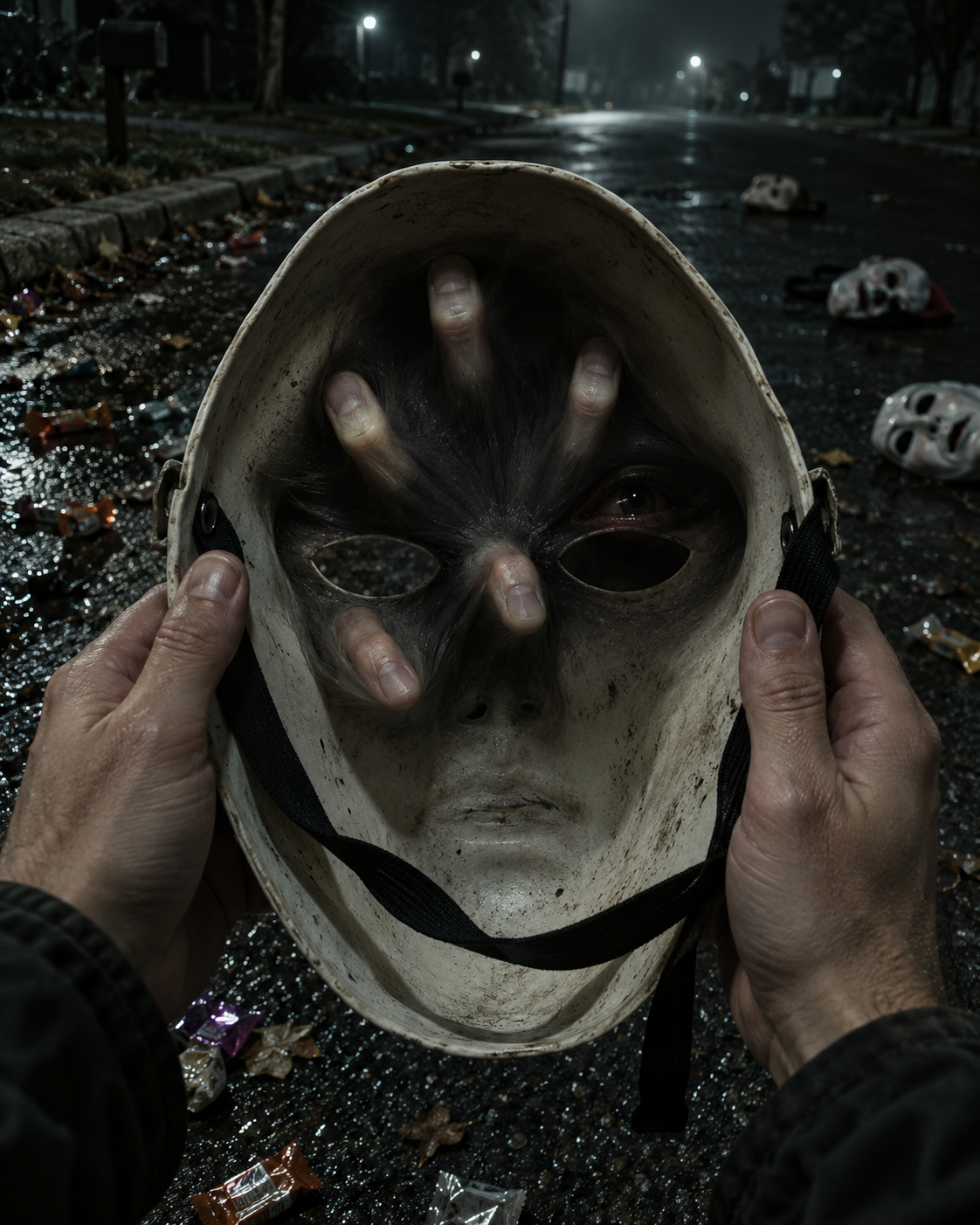
The prompt: After the Halloween party, you pull off your cheap plastic mask.
Something inside it grips your fingers.
You look into the hollow back.
A human eye opens beneath the lining.
From deep inside the mask, your own voice whispers:
“Put me back before it notices you’re empty.”
Across the street, someone drops their mask.
Their body remains standing.
Begin With Physical Evidence
Before the eye opens, let your character feel the problem.
The elastic catches. The mask is heavier than it was earlier. Something presses against the thumb supporting its chin.
Make them adjust their grip.
That small movement brings their hand into contact with something warm.
Use the mask’s ordinary construction to make the impossible detail clear: thin plastic, stapled elastic, rough edges around the eyeholes. Your character has handled it all evening. There was nowhere for a hand to hide.
Make the Warning Difficult to Follow
“Put me back” offers an immediate action.
Your character knows what doing that requires. They have to bring the thing toward their eyes, nose, and mouth.
Give them a reason to consider it anyway.
Perhaps the eye inside the mask turns toward someone approaching. Perhaps the voice begins naming things your character cannot remember about the last hour.
Let its fear become evident before revealing what frightens it.
Change One Person in the Background
Keep the wider scene quiet enough for your character to notice a single movement.
Someone drops a mask.
They remain upright. Their hands hang loose. Then their head slowly turns toward the sound of your character breathing.
Decide what they can perceive. Movement? Speech? An uncovered face?
Establish that rule through one action, then force your character to work within it.
Writing exercise: Write 400–600 words beginning when the mask catches your fingers. Keep the threat close and physical. End with your character deciding whether to put it back on.
Your Final October Challenge
Choose the situation you least want to imagine yourself in.
Write the first sentence before deciding how your character escapes.
If you’ve followed along this month, thank you. Whether you wrote every day, saved a few images, or returned after a gap, I hope something here gave you a story worth pursuing.
Which final prompt stays with you: The Evacuation or The Unmasking?
Share your choice—or your opening line—in the comments.

Sleep Horror Writing Prompt: The Next Breath
October 29 — Day 29 of the visual horror writing challenge
You download a sleep-recording app because you want to know whether you snore.
The first recording contains a fan humming, sheets rustling, and your own uneven breathing.
Then someone beside the microphone whispers a number.
Another breath.
Another number.
You live alone.
This sleep horror writing prompt begins with evidence of something your character slept through. Tonight, they’ll have to face it awake.
The Next Breath: Your Writing Prompt
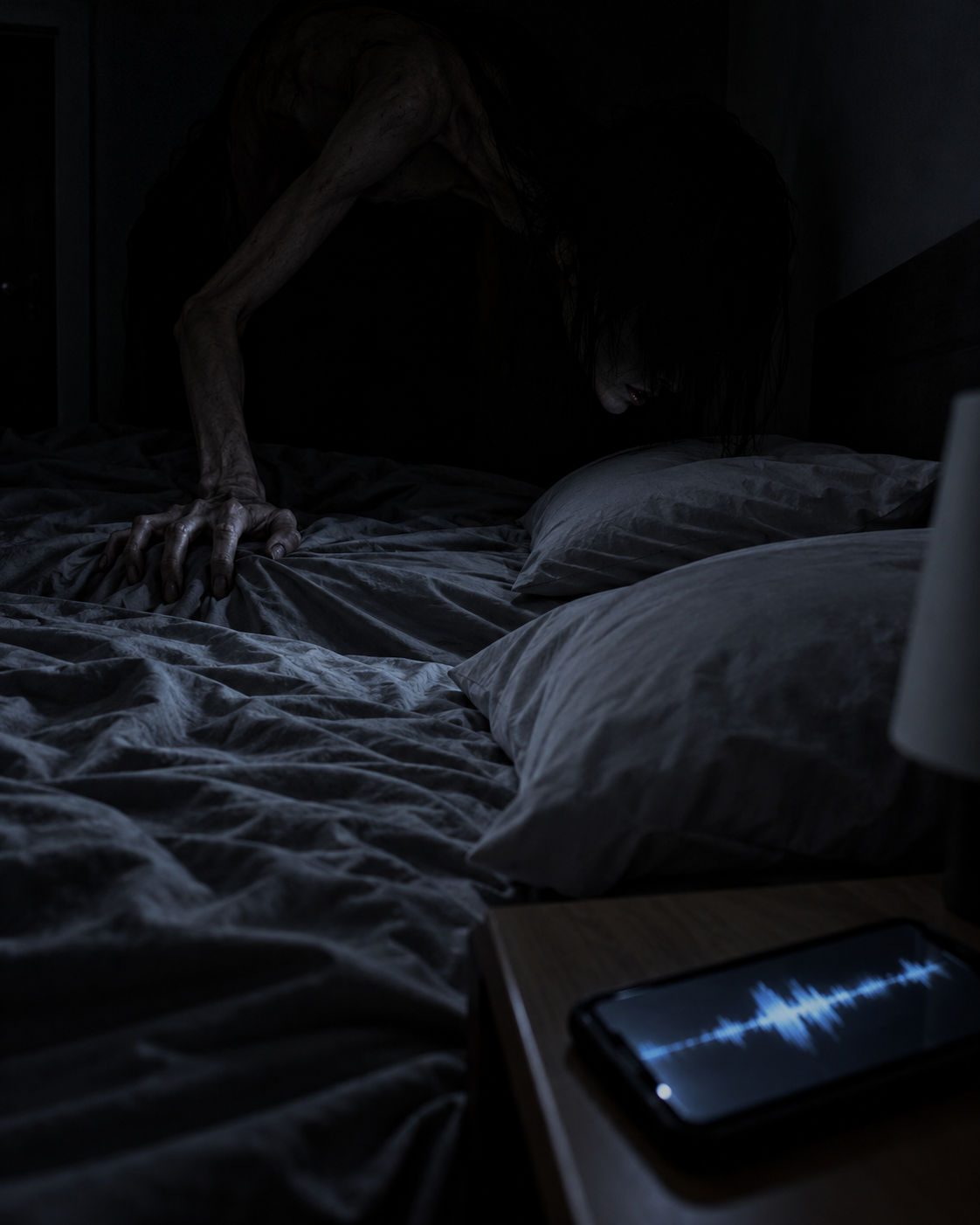
Your sleep app records a stranger counting each time you exhale.
The counting stops at 312, just before your alarm.
At work, you listen again with headphones.
Beneath the stranger’s voice, you hear yourself whisper:
“Please. I can stay awake tomorrow. Let me have this one.”
You have no memory of saying it.
That night, you sit upright with every light on.
At 2:13 a.m., the mattress sinks beside you.
“Three hundred and thirteen.”
Let the Recording Establish a Pattern
Make the first few seconds ordinary.
Your character hears the bed creak when they turn over. A car passes outside. They recognize the rattle of their fan.
Then introduce the counting.
Keep the voice consistent enough for your character to test what they’re hearing. It speaks after each exhale. When they pause between breaths, it waits.
The recording becomes more frightening as their explanation grows more precise.
Someone was close enough to hear them breathing. Someone remained there for a long time. And sometime during the night, your character knew it.
Make Their Own Voice Unfamiliar
The whispered plea provides evidence of an encounter they cannot remember.
Think about how they sound.
Perhaps they speak with the careful patience of someone calming a dangerous animal. Perhaps their voice is hoarse from repeating the same request.
Give the reader one detail that suggests this has happened before.
Your character might hear themselves say, “You promised,” before the counting resumes.
Avoid revealing the whole arrangement. Let the character understand just enough to dread bedtime.
Give Them a Credible Plan
Your character has hours to prepare.
They could ask someone to stay, leave the apartment, set up a camera, or sit beneath bright lights with the recording running.
Choose a plan that fits their circumstances and let it help temporarily.
If they stay with a friend, the first part of the night passes quietly. Then the friend asks why they keep muttering numbers.
If they set up a camera, it shows an empty room. The audio still captures the mattress springs compressing.
Each attempt should reveal something about the threat. Keep the discoveries connected so the danger feels consistent.
Make Breathing Part of the Scene
Once the visitor arrives, an ordinary bodily action becomes something your character cannot ignore.
They try holding their breath. Their chest tightens. They release a small amount of air through their nose.
The voice counts.
Now they know it can hear that too.
Use physical detail sparingly: a trembling jaw, damp palms against the sheets, the effort of swallowing without making a sound.
Let the reader feel the time between numbers.
Decide What the Count Means
Know the answer yourself, even if the scene ends before your character discovers it.
The visitor might be measuring how long a body lasts. It might need a certain number of breaths before it can use the lungs itself.
Perhaps the count belongs to something elsewhere, and your character’s breathing is keeping it alive.
Choose an explanation that shapes the visitor’s behavior. Does it become impatient when your character holds their breath? Does it lean closer? Does it begin breathing for them?
Your Horror Writing Exercise
Write 400–600 words beginning with the mattress sinking.
Keep your character awake throughout the scene. Reveal the visitor through sound, pressure, and its effect on the room before describing its appearance.
End when the count changes in a way your character understands.
What happens at the final number?
Share your opening line or your theory in the comments.
Scary Horror Writing Prompt: The People in the Road
October 28 — Day 28 of the visual horror writing challenge
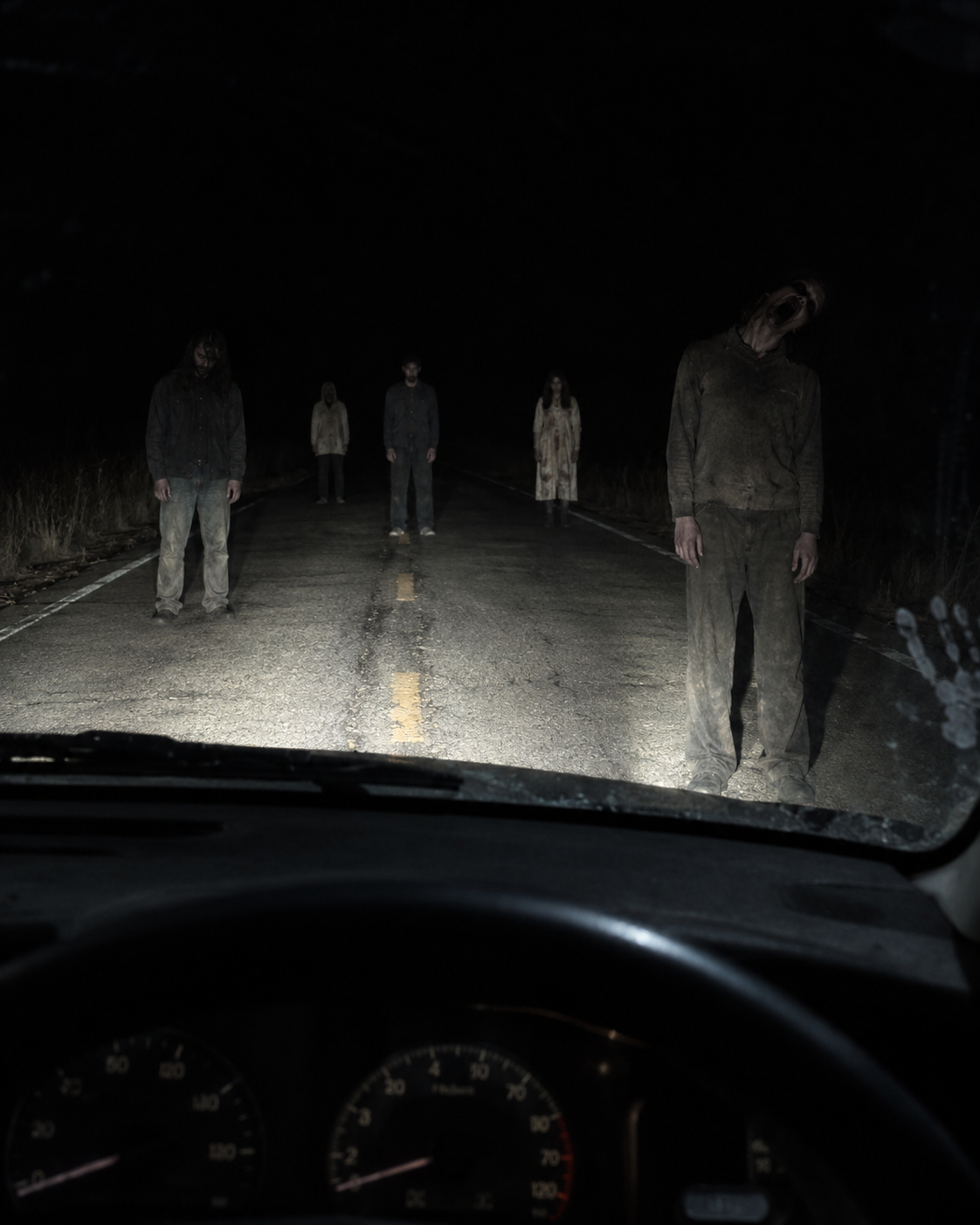
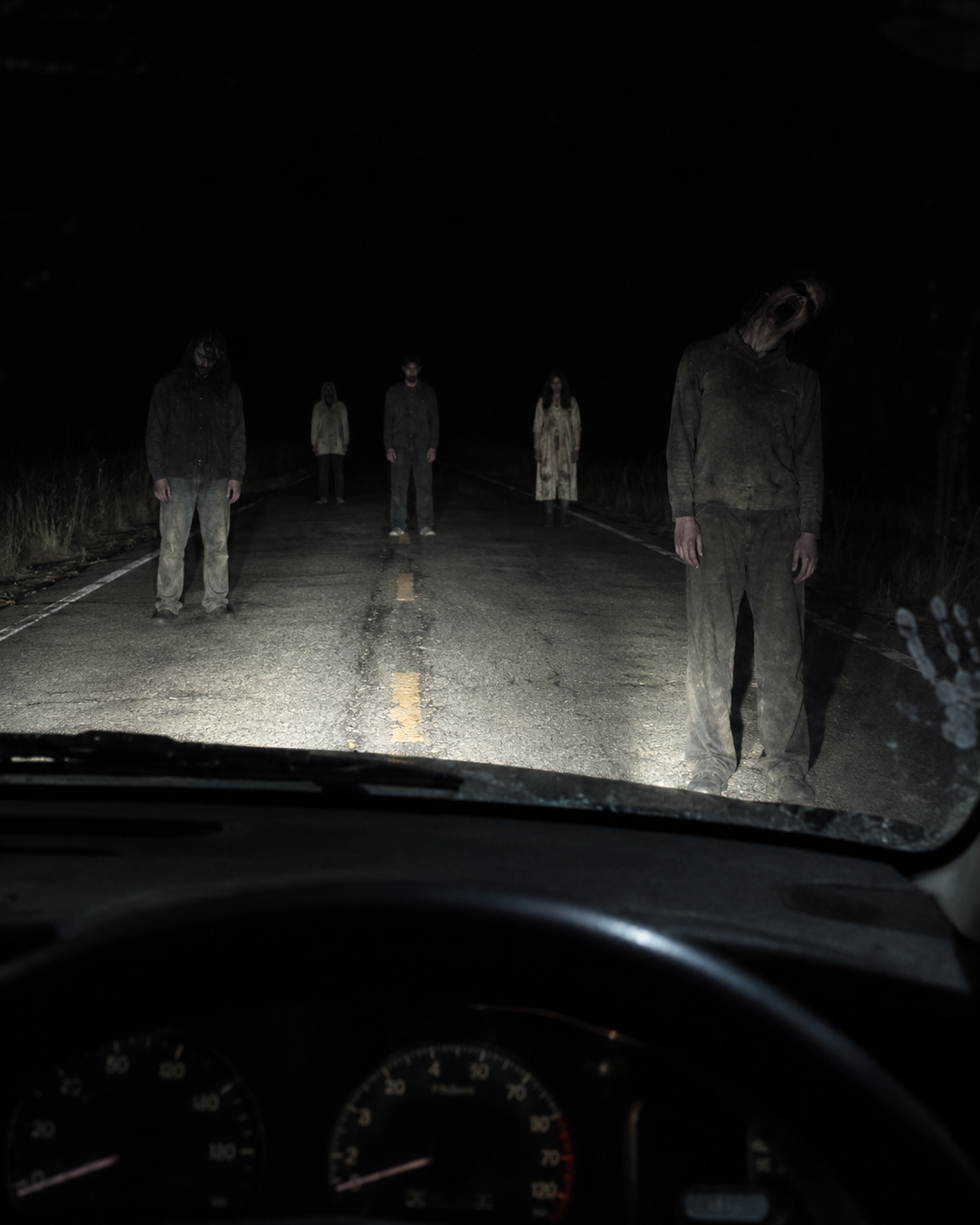
There are five people standing in the road.
Your headlights catch them just beyond the bend. No broken-down car. No flashlights. No one waving for help.
You brake.
They remain perfectly still.
Then you notice that none of them has closed their mouth.
Today’s scary horror writing prompt puts your character inside a locked car on an isolated road. They can see the danger ahead. What they cannot see is how far it has already reached.
The People in the Road: Your Writing Prompt
You’re driving home when five people appear in your headlights.
Every time you blink, they’re closer.
You put the car in reverse. The backup camera shows five more standing behind you.
Then a handprint appears on the inside of the windshield.
From the empty passenger seat, someone whispers:
“Keep looking at them. They’re waiting for me to finish.”
Build Fear Through What the Driver Notices
Begin with details your character can observe from the seat.
The nearest person is barefoot on broken asphalt. Someone farther back wears a hospital bracelet. A woman’s hair blows across her face, although the roadside grass is still.
Choose two or three details. Give the reader enough time to picture each one.
Then change the distance.
A figure previously beyond the headlights now stands beside the center line. Your character never saw a step.
Let them doubt the first movement. They were looking at the gearshift. They were checking the mirror. There could be an explanation.
The next time, give them evidence they cannot dismiss: a face close enough to reveal dirt packed between the teeth.
Make Every Escape Require a Risk
Inside a car, several familiar actions demand that the driver look away.
Finding the door-lock button. Reading a phone screen. Checking behind them before reversing.
Use those movements to create difficult choices.
Your character needs to call for help, but the phone has fallen beside the seat. They need to reverse, but watching the camera means taking their eyes off the figures ahead.
Establish the danger clearly, then make ordinary actions costly.
Keep the car working at first. An engine that starts and headlights that remain bright allow your character to attempt an escape. What happens when those attempts fail can reveal more about the threat than a convenient dead battery.
Let the Body Betray Them
Your character cannot keep their eyes open indefinitely.
Their eyes water. A contact lens shifts. They try holding one eyelid open with a finger, but their hand trembles against their cheek.
Use physical sensations to measure the scene.
A dry throat makes swallowing loud. Their foot slips against the brake pedal. They can hear breath beside them and cannot tell whether it is matching their own or waiting between each inhale.
Keep returning to the effort of watching.
The reader should understand what the character must do—and how little longer they can do it.
Bring the Threat Inside
The handprint changes the situation.
Until then, the windshield has served as a boundary. Now evidence appears on the side your character occupies.
Avoid explaining the passenger immediately.
Let the seat cushion compress. Let the seat belt draw slowly from its housing. Perhaps the passenger-side mirror begins to adjust, although neither of the driver’s hands is near the controls.
Choose one action that suggests a purpose.
The whispered sentence introduces an especially unpleasant question: what is the passenger finishing?
Your character may have to turn toward it to find out.
Questions to Develop Your Scene
Why are the figures holding their mouths open?
What changes when the driver looks through a phone camera?
Does the thing in the passenger seat need the driver alive?
What would make the driver deliberately close their eyes?
Your Horror Writing Exercise
Write 400–600 words entirely from inside the car.
Begin when the driver brakes. Keep the figures silent. Reveal the passenger through physical evidence before allowing it to speak.
End with your character making a choice that cannot be undone.
Share your opening line or your theory in the comments. What is the passenger waiting to finish?

Two Unsettling Horror Writing Prompts for October 26–27
We’re catching up with two horror prompts about ordinary routines that take an unexpected turn.
One starts with an elevator ride. The other starts with feeding the animals.
Both involve discovering that something has been happening right beside you for years.
Pick an image, give yourself ten minutes, and follow the detail that bothers you most.
October 26: The Floor Beneath the Basement
The prompt: You’ve cleaned the same office building for eleven years. Tonight, the elevator has an extra button beneath the one marked Basement.
You press it.
The elevator descends for nearly three minutes before opening onto a flooded garden. Flowers climb the ceiling. An empty wheelchair stands in the water.
Tied to its handle is your employee badge.
The photograph shows you decades older.
I would like to speak to whoever handles building maintenance. And possibly time.
Make the Routine Believable
Give your character a few habits before introducing the button.
They know which elevator light flickers. They brace for the familiar jolt between floors. They’ve learned to lift the cleaning cart’s front wheel over the uneven threshold.
That familiarity makes the new button harder to dismiss. Your character has stood beside this panel hundreds of times.
Let them check it before pressing. They might wipe it with a cloth or photograph it. Perhaps they decide somebody has installed a service level without bothering to tell the people who clean the place.
A sensible explanation can carry them surprisingly far into danger.
Give the Garden a Personal Detail
The badge is the first connection. Add another that makes the place feel as though it has been waiting.
A familiar cardigan hangs over the chair. The flowers are the same kind someone planted outside their childhood home. A cup beside the wheel contains their usual coffee order.
Choose details that suggest a life continuing here.
Then decide what your character wants badly enough to step out of the elevator.
Questions to explore:
Who has been tending the garden?
Why does the older version of your character still have an employee badge?
What happens upstairs while the elevator is below the basement?
Try this: Write the scene from the moment the elevator stops. Keep your character inside until the final sentence.
October 27: The Extra Bowl
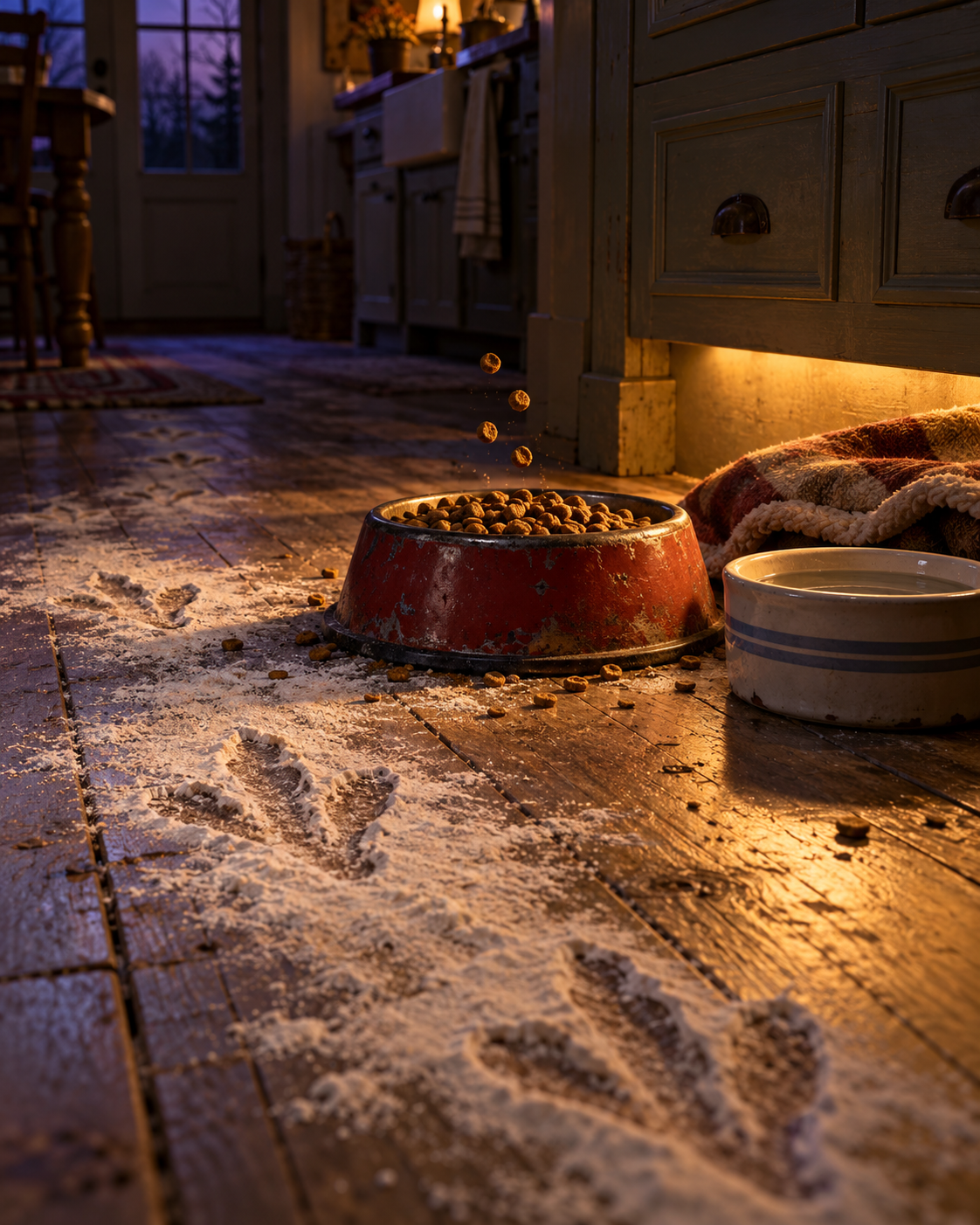
The prompt: When you inherit your grandmother’s house, you also inherit her elderly dog.
Her instructions are simple: feed the dog at six, fill both water bowls, and leave the red food bowl beside the back step.
You assume the second bowl is for a stray.
One evening, you forget it.
The dog carries the empty bowl to you and backs away.
From somewhere directly above your head, something begins to whine.
I would fill the bowl. We can investigate the family arrangements after dinner.
Let the Dog Know More
The animal’s behavior can establish a history your character doesn’t understand.
Perhaps the dog waits for the red bowl to be filled before eating. Perhaps it sleeps facing an empty corner or carefully walks around a section of the kitchen.
Keep those actions consistent. Your character can misinterpret them at first, then understand them differently after the first encounter.
The dog has lived here longer. It knows the routine.
Make the Arrangement Complicated
Decide why your grandmother fed the visitor.
She might have been frightened of it. She might have felt responsible for it. Perhaps it arrived small and injured, and she never discovered what it would become.
Give your character evidence of that relationship: food purchases going back years, a scratched measuring cup, a note reminding someone that the red bowl must be washed separately.
Then introduce a change.
The bowl is too small now.
Questions to explore:
What has the visitor done for the household in return?
Why can’t your character see it?
What happens when it follows them away from the house?
Try this: Write 300 words without showing the visitor. Reveal its size and location through sound, movement, and the dog’s reactions.
Which would you choose: the elevator button or the red bowl?
Share your opening line or your theory in the comments. I’m staying upstairs and making sure everyone’s dinner is on time.

Three Cozy Horror Writing Prompts: October 23–25
The weekend got away from me, so we’re catching up with three little nightmares.
This collection takes us to a library, a bakery, and a cemetery bench. There are books, cake, and coffee. I’ve provided several lovely things to enjoy while everything goes terribly wrong.
Choose an image, set a timer for ten minutes, and see where it takes you.
October 23: The Borrowing Fee

The prompt: A small library lends books that let you experience someone else’s memories. To borrow one, you must leave a memory of equal weight.
You offer an ordinary childhood afternoon.
The librarian places your memory on a brass scale. Her expression changes.
“Who told you this belonged to you?”
I would prefer to have this conversation sitting down.
For this prompt, give the borrowed memory a detail your character has always loved: sunlight on a kitchen floor, someone humming, a warm hand holding theirs.
Then introduce one thing that doesn’t fit.
Perhaps the kitchen belonged to a house they never entered. Perhaps the person holding their hand is still alive—and insists they’ve never met.
Questions to explore:
Why did someone give your character this memory?
What have they forgotten in its place?
Does the librarian want to help, or keep them from asking questions?
Try this: Describe the memory in a short paragraph. Rewrite it with one changed detail that makes the entire scene frightening.
October 24: The House Specials

The prompt: A new bakery sells tiny cakes shaped like houses in your town.
You buy the one that looks like yours.
On the way home, its sugar chimney begins to smoke. Your phone rings. A neighbor says your fireplace has lit itself.
Then you notice the cake beside yours in the box has a fallen branch pressed into its roof.
Outside, the wind picks up.
I’d like to know whether the baker takes returns. Immediately.
The danger here becomes personal through accuracy. Give the cake a feature nobody could have guessed: a cracked back step, a crooked repair, a tiny version of the spare key hidden beneath a flowerpot.
Once your character realizes the connection, make them choose what to do with the cake.
Keeping it safe sounds sensible. But icing softens. Cake crumbles. And sooner or later, someone will wonder why there’s a pastry under twenty-four-hour supervision.
Questions to explore:
Do changes to the cakes cause events, or predict them?
Who bought the other houses?
What happens when someone takes a bite?
Try this: Write the scene in which your character proves the connection with one tiny, apparently harmless change.
October 25: The Second Coffee

The prompt: Every Sunday, you bring two coffees to the cemetery and sit beside your best friend’s grave.
Today, the blanket beside you sinks under an invisible weight.
You hear the familiar sound of someone lifting a cup.
Then a stranger’s voice says, “They couldn’t come. They asked me to meet you.”
That is a considerable change to the afternoon’s plans.
Begin with the ritual before introducing the stranger. Let your character brush leaves from the bench, complain about the coffee price, or share something funny that happened during the week.
Those habits establish what this visit means. The interruption then threatens a relationship the reader has begun to understand.
Decide what the stranger knows. A private joke might earn your character’s attention. An incorrect nickname might make them reach for their keys.
Questions to explore:
What could prove the stranger was sent by their friend?
Why can’t the friend come?
What does accepting the second coffee allow the stranger to do?
Try this: Write a conversation in which your character asks three questions. Let each answer make leaving more difficult.
Pick Your Trouble
A memory that belongs to someone else. A cake connected to your home. An unexpected visitor on a cemetery bench.
Which one would you write?
Share your choice or your opening line in the comments. And if you’re catching up too, you can start with whichever image catches your attention. The nightmares will wait their turn.

The Missing Hour: A Small-Town Horror Writing Prompt for October 22
A jigsaw puzzle seems like a fairly safe evening activity.
Make some coffee. Find the edges. Spend twenty minutes insisting a piece must be missing before discovering it under your elbow.
Then you recognize someone in the picture.
For day 22 of our October horror writing challenge, we’re putting a small-town secret on the kitchen table, one piece at a time.
The Writing Prompt
Last Thursday, everyone in your town lost the same hour.
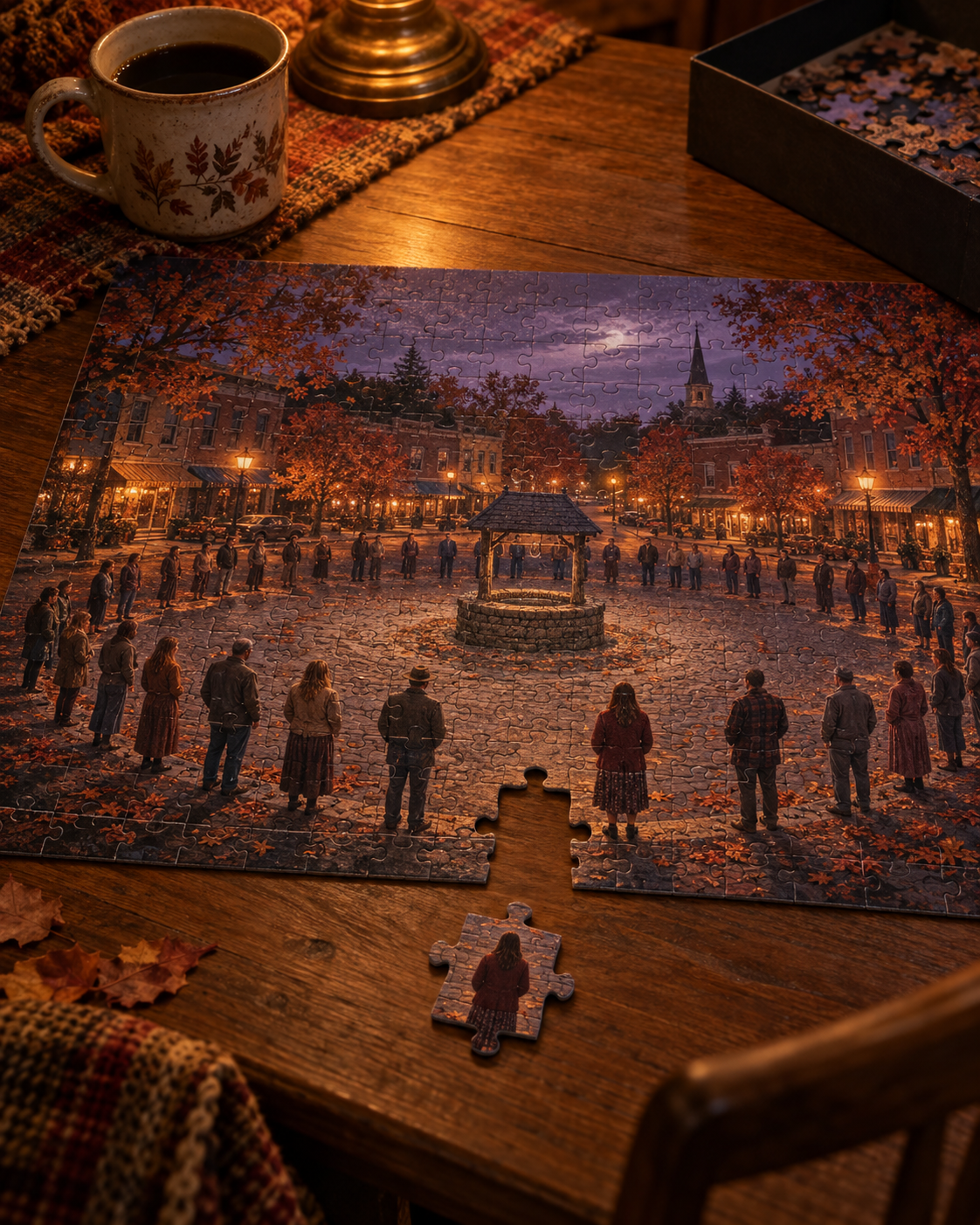
No one remembers where they were between 8:13 and 9:13 p.m. Nothing seems to have been stolen. Nobody is missing. Eventually, people stop discussing it.
Then you open a secondhand jigsaw puzzle.
The picture shows your town gathered around the old well at night. You recognize your neighbors, your family, and the clothes they wore last Thursday.
One piece remains.
It shows you standing in the circle.
On the back, in your handwriting, are four words:
“Don’t let me remember.”
Let Recognition Build Slowly
Your character shouldn’t understand the whole picture immediately.
Start with a familiar landmark: a particular roofline, the crooked clock above the hardware store, a tree that split during a storm.
Then let them find a person.
A red scarf might catch their attention first. Their neighbor owns one just like it. Nearby, a tiny painted figure has the same walking stick as their father.
Recognition gives the scene momentum. Every piece answers one question while making the next harder to ignore.
By the time your character recognizes their own clothes, the reader should be leaning closer too.
I would already have pushed my chair back, but I’d probably still be looking. Curiosity is an unfortunate quality to bring to a haunting.
Give the Missing Hour a Practical Consequence
Think about what people noticed afterward.
Someone’s dinner burned. A dog escaped its yard. A driver found their car parked several streets from home.
Choose one small consequence your character has been unable to explain. Then place evidence of it inside the puzzle.
Perhaps the escaped dog is standing beside the well, calmly watching something the people cannot see.
That connection makes the picture harder to dismiss as a coincidence or a cruel joke. It also rewards the reader for paying attention.
Make Remembering a Difficult Choice
“Don’t let me remember” raises a useful question: what did your character know when they wrote it?
They may have chosen to forget something unbearable. They may be protecting someone. Perhaps remembering carries a consequence beyond fear.
Give them a reason to continue despite the warning.
Someone they love appears in the picture holding a shovel. Their child stands dangerously close to the well. A person who supposedly moved away years ago is among the crowd.
Now your character has something to lose by leaving the puzzle unfinished.
Let the temptation be specific. We should understand why they pick up that final piece, even while wishing they would put it down.
Use the Puzzle as a Physical Object
Keep returning to what their hands are doing.
A thumb rubs the worn cardboard edge. A coffee cup leaves a damp ring beside the picture. The final piece fits so neatly that your character presses it into place before thinking.
That ordinary little movement can carry the scene’s biggest consequence.
You could also let them try taking the puzzle apart. What happens when they remove a neighbor’s face? Does the phone ring? Does someone knock? Does the space remain empty when they look again?
Choose a rule and follow it.
Your Ten-Minute Writing Challenge
Write 300–500 words beginning when your character recognizes the first person.
Keep the scene at the table. Let the missing hour emerge through details in the picture and your character’s reactions.
End with their decision about the final piece.
Would you finish the puzzle—or trust a warning you don’t remember writing?
Tell me in the comments. I’m suddenly feeling very comfortable with leaving a project unfinished.

The Listening Trees: A Folk Horror Writing Prompt for October 21
I like the woods. Give me autumn leaves, cool air, and a crow with an opinion, and I’m fairly happy.
Finding out the trees have been listening to my conversations would complicate that relationship.
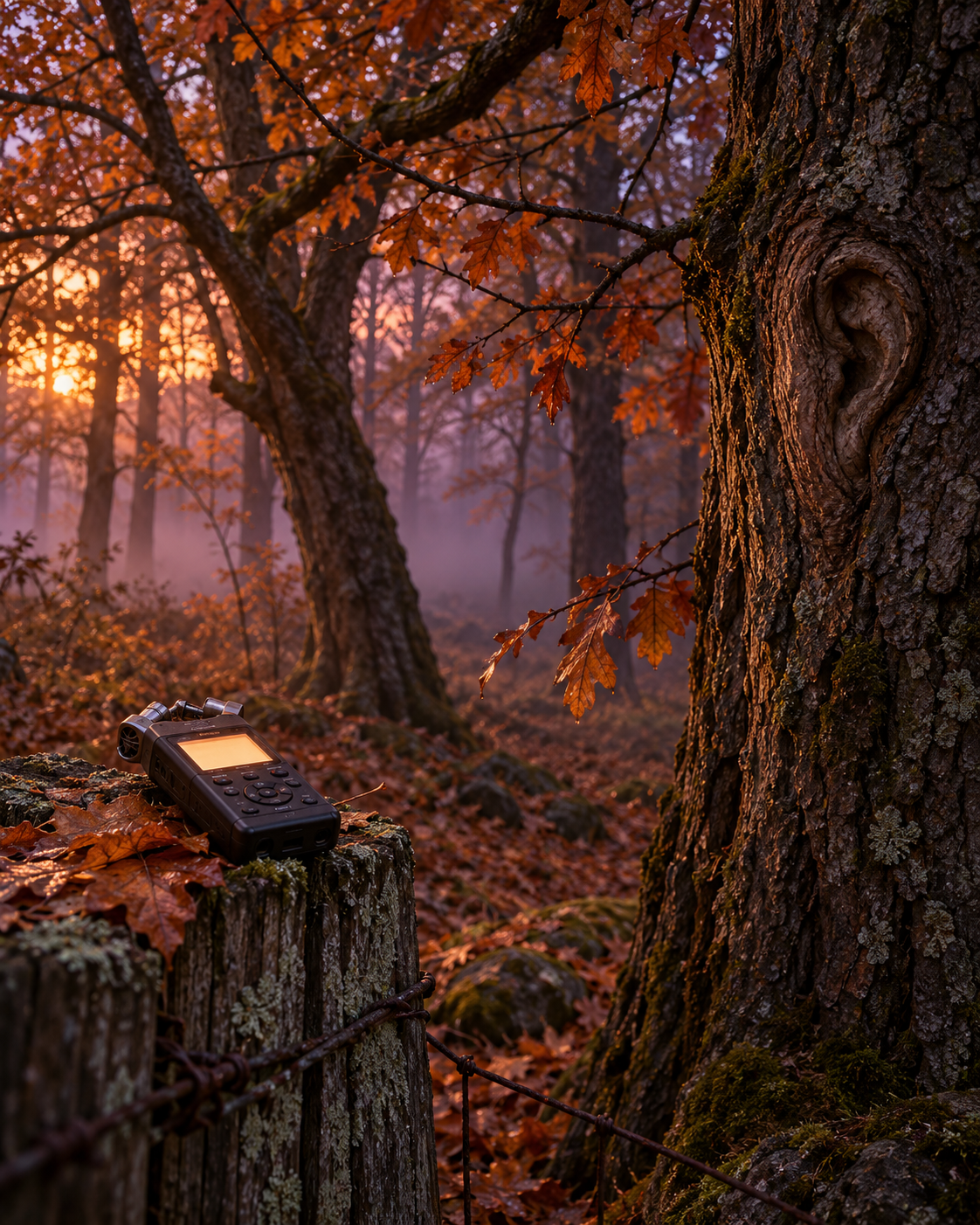
For day 21 of our October horror writing challenge, we’re heading into the woods with an audio recorder. We want rustling leaves, birdsong, maybe a few branches creaking.
Unfortunately, the trees have prepared something else.
The Writing Prompt
You leave an audio recorder at the edge of the woods to capture the sounds of autumn.
When you play it back, you hear yourself talking to someone.
You were alone the entire time.
The conversation begins with small talk. Then the other voice asks permission to come out of the woods.
Your recorded voice says yes.
The next evening, you hear that same small talk coming from the trees.
They’re practicing.
Give Your Character a Reason to Listen
Before anything frightening happens, establish what your character hopes to record.
Maybe they make nature videos. Maybe they’re collecting sounds for a school project. Perhaps they want to preserve the woods before a new road cuts through them.
That purpose gives the recording personal value. Your character has a reason to put on headphones and listen closely, even when the first few minutes seem ordinary.
Let them recognize familiar sounds: a dog barking across the field, a loose fence wire, a truck changing gears on the hill.
Then introduce a voice close enough to have been standing beside the microphone.
Make the Imitation Imperfect
A copied voice becomes unsettling when it almost gets something right.
Perhaps the trees use your character’s laugh at the wrong moment. Perhaps they pause in the middle of a name as though deciding how to pronounce it.
Choose one mistake the character would recognize.
Your character might say, “That’s fine,” when they’re irritated. On the recording, the same words arrive with warm enthusiasm. Someone has learned the phrase without understanding what it means.
You can build a whole scene around that small failure.
And please let your character take the headphones off at least once. I would need a brief interval of pretending I hadn’t heard any of this.
Give the Woods a Rule
Why does something in the forest need permission?
Decide what counts as consent in your story. Does an imitation carry the same power as the original voice? Must the invitation be spoken at the boundary? Does the person have to mean it?
You don’t need to explain every detail to the reader, but knowing the rule will help you shape the danger.
Perhaps the recording is a rehearsal, and the trees still need one real answer.
Now an ordinary greeting becomes a trap.
“Nice evening, isn’t it?”
Your character hears a neighbor’s voice beyond the fence. They open their mouth to reply.
That’s where your scene gets interesting.
Keep the Landscape Familiar
Use a place your character knows well.
They remember climbing that oak. They’ve repaired that fence. They know exactly where the path bends toward the creek.
Then change one detail.
A branch leans across a route that was clear yesterday. A familiar tree has a hollow at the height of a human mouth. The birds keep singing, but only between sentences.
The character should recognize enough to want to stay—and notice enough to know they should leave.
Questions to Explore
Who taught the trees their first words?
What does the forest want to bring across the boundary?
Can your character warn someone without giving the woods more language to use?
What happens when the imitation learns to say no?
Your Ten-Minute Writing Exercise
Write 300–500 words beginning when your character hears their own laugh on the recording.
Keep them inside while they listen. Build the scene through sound and their physical reactions.
End with someone outside using the opening line from the recording.
Would your character answer?
Share your first line or your theory in the comments. I’m going to continue admiring trees, but apparently we need to discuss some boundaries.

The Wrong Shadow: A Horror Writing Prompt for October 20
An October evening walk sounds lovely. Cool air, leaves under your shoes, a little quiet before you head home and remember everything you still need to do.
Then your shadow stops following you.
There goes the relaxing portion of the evening.
For day 20 of our October horror writing challenge, we’re taking something so familiar you barely notice it and giving it a reason to stop cooperating.
You can leave a strange object behind. Getting away from your own shadow might require a little more planning.
The Writing Prompt
You’re walking beneath a streetlight when you notice your shadow has stopped.
You take another step. It stays where it is.
You raise your hand.
It slowly shakes its head.
Then it points toward the stretch of pavement ahead.
Under the next streetlight, another shadow is waiting.
There’s nobody standing above it.
Start With a Small Mistake
Before the shadow does anything obvious, let it get one movement slightly wrong.
Your character stops to tie a shoe, but the shadow remains standing. Or they push their hair behind an ear and see the dark hand finish the gesture a second too late.
Give them time to explain it away.
The light is strange. They’re tired. A branch moved overhead.
I would personally spend a concerning amount of time blaming the streetlight. Once I admitted my shadow was behaving independently, I’d have to decide what to do about it, and I’m rarely dressed for that sort of responsibility.
That moment of uncertainty gives you room to build tension. The reader can notice the problem while your character is still trying to finish a perfectly ordinary walk.
Give the Shadow a Specific Intention
Decide what your shadow wants, even if the reader won’t learn the answer immediately.
Perhaps it’s trying to protect your character. Perhaps it recognizes the shape beneath the next light. Perhaps it’s been waiting years for a chance to trade places with someone.
Its intention will shape its movements.
A frightened shadow might flatten itself beneath a bench. An impatient one might keep pointing. A threatening one could stretch a hand across the pavement until its fingers touch your character’s shoe.
Choose one clear action and let your character respond. You don’t need a whole pavement full of monsters to make someone afraid to move.
Make the Escape Complicated
My first thought is to get out of the light.
Which raises an unpleasant question: where does the shadow go when you can’t see it?
Your character could run into the dark, switch on their phone’s flashlight, or wait for a passing car. Each choice changes the light around them.
Choose a rule and keep it consistent. Maybe shadows can move freely only when their edges touch. Maybe a second light splits them. Maybe your character’s shadow has been keeping something attached to their feet, and stepping into darkness will release it.
Test the rule through action. Let your character discover one useful thing—and pay for learning it.
Questions to Get You Writing
How does your character recognize the waiting shadow?
What gesture does their own shadow refuse to copy?
Does the waiting shape belong to someone who died, disappeared, or hasn’t arrived yet?
What would persuade your character to trust the thing at their feet?
Your Ten-Minute Writing Challenge
Write 300–500 words beginning with a movement that doesn’t match.
Keep the scene on one short stretch of pavement. Use the scrape of shoes, damp leaves, distant traffic, and the streetlight’s hum to make the place feel real.
Your character can speak, but neither shadow can answer aloud.
End when one of them reaches the other.
Which possibility bothers you more: a shadow trying to leave you, or one desperately trying to keep you where you are?
Tell me in the comments, or share the first line of your scene. I’ll be checking the pavement on my next walk.


The Coat That Came Home: A Creepy Writing Prompt for October 19
An old coat hanging beside the boots shouldn’t require much attention. You walk past it, pile a scarf over it, and occasionally wonder whether it’s cold enough outside to bother.
But suppose you donated that coat last week.
You remember folding it. You remember putting it in the bag. You even remember being pleased that you’d finally taken the donations out of your car.
Now it’s hanging in your house again.
Personally, I would like credit for finishing the errand before we address the haunting.
For day 19 of our October horror writing challenge, we’re working with an object that refuses to stay gone—and a pocket you probably shouldn’t reach into.
The Writing Prompt
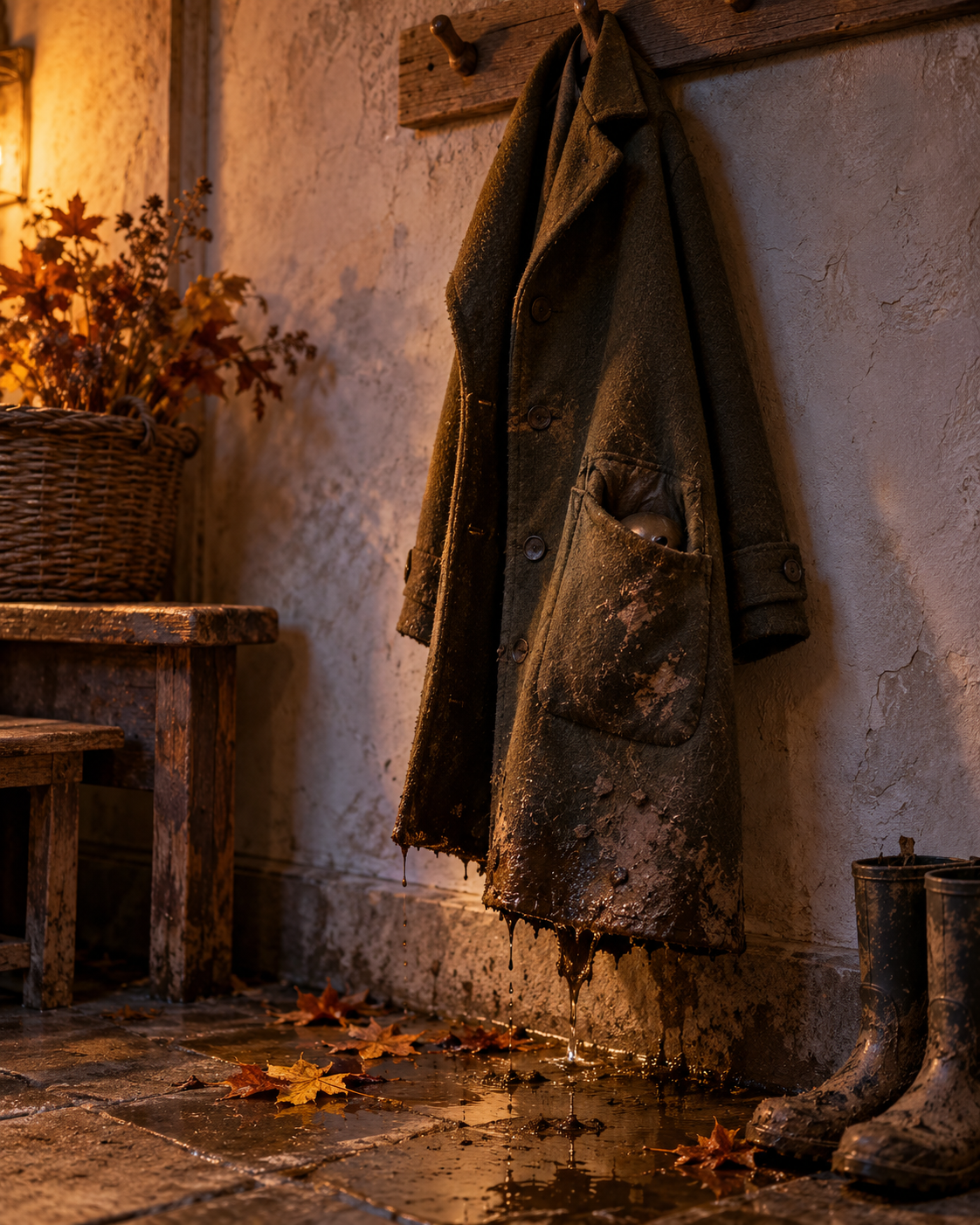
You donate an old wool coat to a thrift store. The next morning, it’s hanging from its usual hook.
You take it back.
It returns soaked in muddy water.
The third time, you drive it to a donation center two towns away.
That evening, something in the pocket begins to move.
When you reach for your phone, a small voice inside the coat says, “Please don’t make us walk back again.”
Give Your Character Something to Recognize
The coat needs one detail that proves it’s the same coat.
Maybe there’s a crooked repair beneath the sleeve. Maybe a button was replaced with one that never quite matched. Your character could find the shopping list they left in the lining years ago.
That recognition matters. Another brown coat is a coincidence. A coat with your grandmother’s uneven stitching is harder to explain away.
Let your character check the detail before they panic. Most of us would want a sensible explanation, especially if the alternative involved calling someone and saying our laundry had become mobile.
Make Each Return Worse
The first return can almost be dismissed. Someone in the house might have unpacked the donation bag.
The second leaves evidence: muddy water beneath the hook, burrs caught in the lining, a smell like a pond in late summer.
By the third return, give your character a reason to stop treating this as an inconvenience.
Something has traveled inside that coat. Now it knows where to find them.
Choose details that suggest a journey. A torn cuff might mean the coat caught on a fence. A smear of yellow paint could match a bridge railing. What might your character discover if they followed those clues backward?
Decide Why They Keep the Coat Nearby
Once the pocket moves, your character needs a reason to stay within reach.
Perhaps they think an animal is trapped. Perhaps the voice sounds like someone they know. Perhaps they’ve spent years regretting the last time they ignored a plea for help.
A sympathetic instinct can lead someone into a very bad decision.
Let them fetch a towel. Let them crouch beside the coat. Let them say, “It’s okay. I’m going to help.”
Then let the pocket get heavier.
Questions to Get You Started
Who owned the coat before your character?
Why does the voice say “us”?
What happens if someone puts it on?
Where has it been walking, and what followed it home?
Your Ten-Minute Writing Challenge
Begin when your character notices water dripping onto the floor.
Keep the creature hidden for the first 300 words. Use the weight of the coat, the movement of the fabric, and whatever your character can hear to build the scene.
End with one sentence from inside the pocket.
I’d love to know what you put in there. I would prefer to learn about it from a safe distance.
Share your first line or your theory in the comments, and save this prompt for your next writing session.

Three Creepy Writing Prompts for October: Days 16–18
I was away, then got sick, so our October horror challenge took an unscheduled intermission. Very inconsiderate of the germs.
We’re catching up with three prompts about things that should be comforting: a family dinner, a basket of yarn, and a familiar voice.
Naturally, I’ve made all three a problem.
Pick whichever image makes you the most uncomfortable. Give yourself ten minutes and see what happens.
October 16: The Extra Place Setting
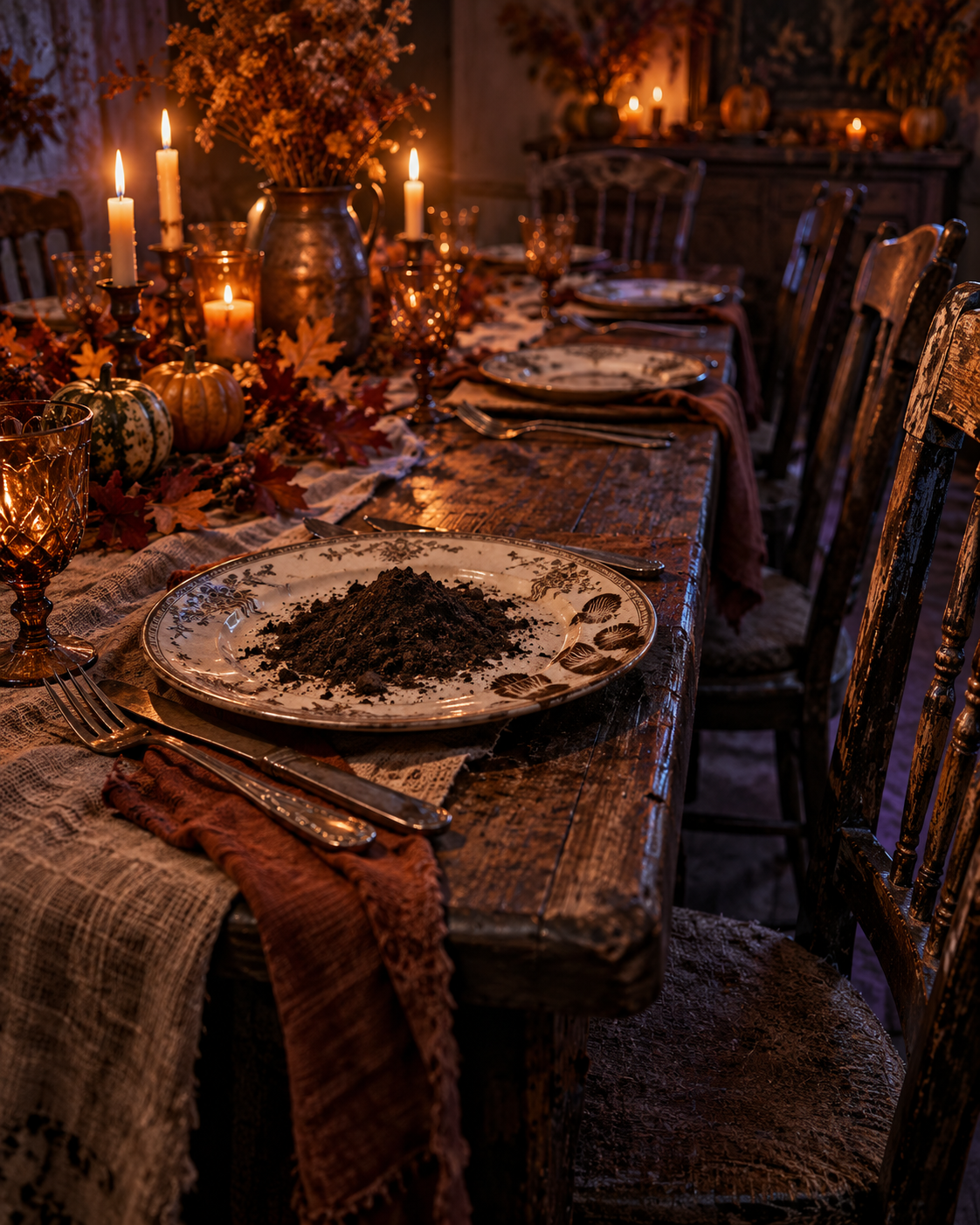
The prompt: Every evening, you set the table for the people who live in your house. Every evening, another place setting appears after you turn away. Tonight, you leave it there.
When dinner is over, that plate is full of wet earth.
Your mother looks at the empty chair and says, “You weren’t supposed to invite him back.”
Well. That seems like information she could have shared before dinner.
There’s something especially uncomfortable about a family acting like the terrifying thing happening in front of you is an old disagreement they’d rather avoid.
Start with the meal. Let someone ask for the salt. Let someone complain that the potatoes are cold. Then have your character notice the dirt.
Questions to explore:
Who used to sit in that chair, and why does the family refuse to say their name?
What happens when your character tries to clear the plate?
Try this: Write the scene without showing the guest. Let the family’s behavior tell us how frightened we should be.
October 17: The Yarn That Won’t End
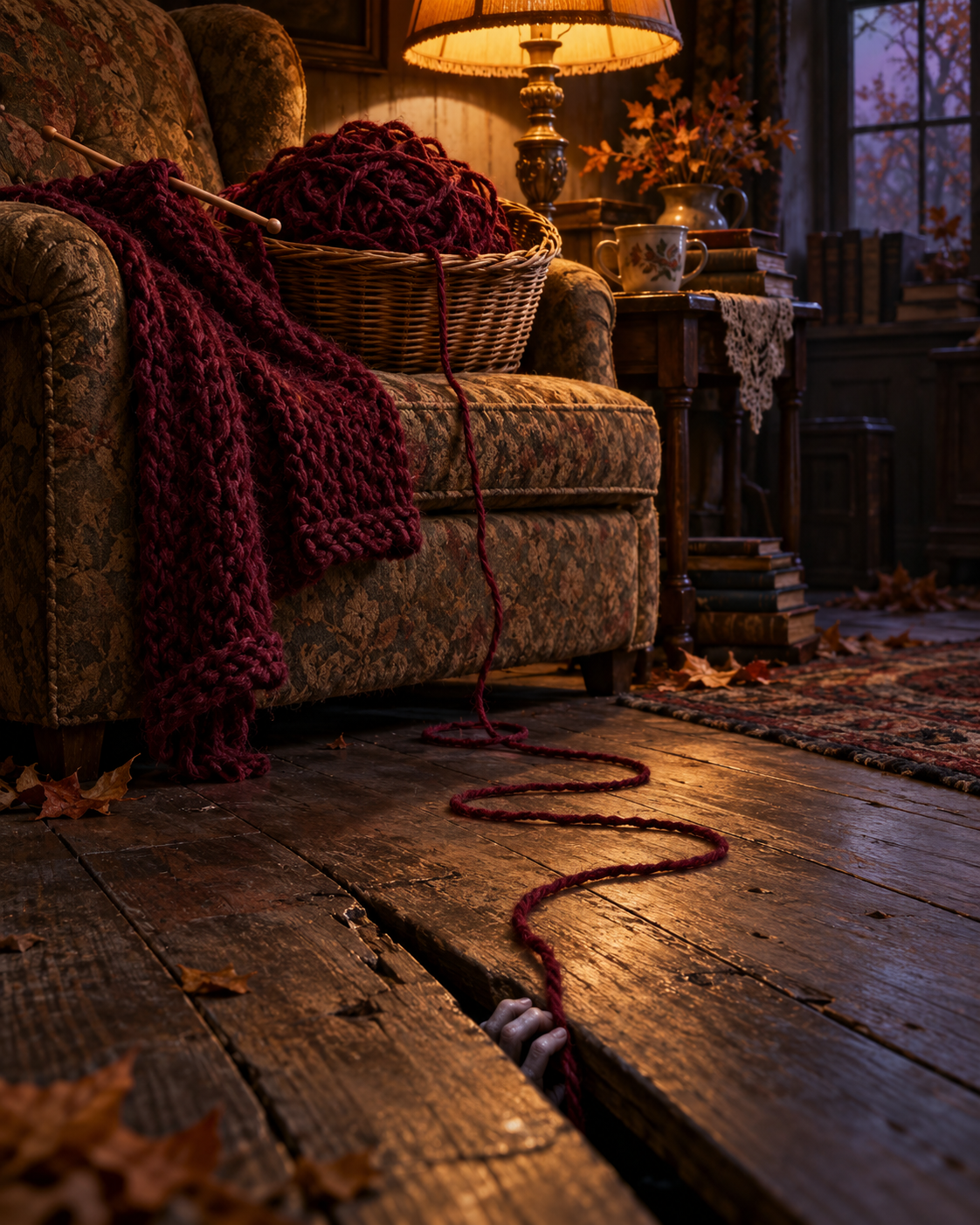
The prompt: You bring home a secondhand knitting basket with an unfinished scarf inside. While putting it away, you notice a strand of yarn disappearing between the floorboards.
You pull.
Something underneath pulls back.
I would like to believe I’d immediately leave the house. Unfortunately, I know myself. I’d probably give it another little tug to make sure, which is exactly how people end up being the cautionary tale.
Give your character an equally believable reason to stay. Maybe the basket belonged to someone they loved. Maybe they recognize the pattern. Maybe the person downstairs starts knocking in a rhythm they haven’t heard since childhood.
Questions to explore:
What changes upstairs each time another length of yarn comes free?
Is the knitting keeping something trapped—or putting it back together?
Try this: Build the scene around touch and sound: wool tightening around a finger, a scrape beneath the boards, knitting needles clicking when nobody is holding them.
October 18: The Last Voicemail
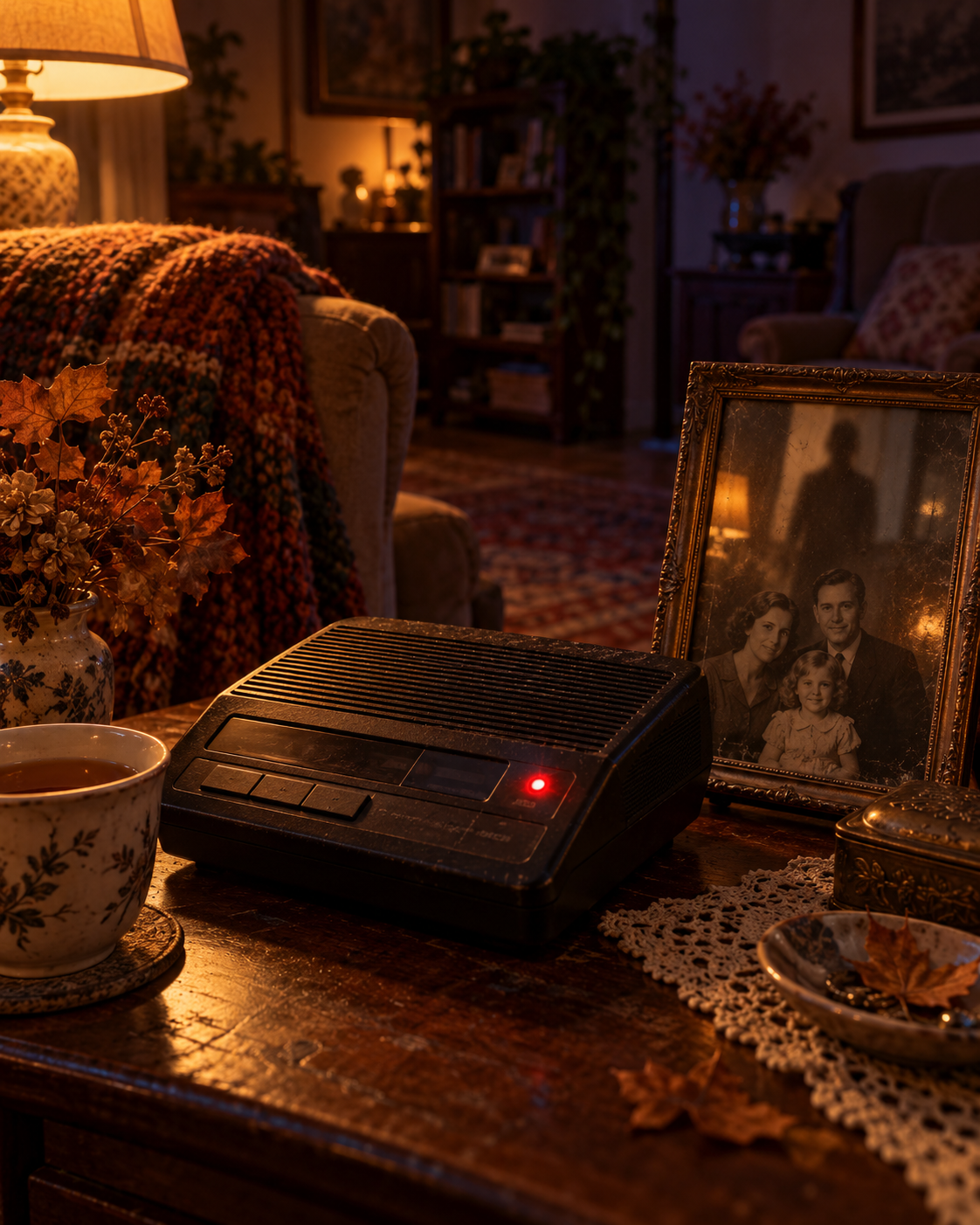
The prompt: While sorting through a deceased relative’s belongings, you plug in their old answering machine. There’s one unheard message.
It’s your voice.
You’re begging whoever finds the recording not to play the next message.
Then the machine announces that a new message has arrived.
No thank you. I have enough trouble listening to recordings of my own voice under normal circumstances.
For this one, think about what would make your character keep listening. Curiosity is a start, but something personal makes the choice harder. Perhaps they hear a loved one in the background. Perhaps their recorded voice mentions something they’ve never told anyone.
Give them a reason to reach for the button even while they’re terrified.
Questions to explore:
What sound in the recording proves it hasn’t happened yet?
What does the next message ask them to do?
Try this: Write the first message in fifty words or fewer. Include one ordinary detail that becomes frightening when your character notices it in the room.
Choose Your Nightmare
An unwanted dinner guest, something beneath the floor, or a message you apparently haven’t recorded yet.
Which one are you writing?
Tell me your pick in the comments—and if you know a writer who enjoys making perfectly ordinary objects upsetting, send this their way.

The Lost and Found: A Creepy Antique Shop Horror Writing Prompt
31 Days of Visual Horror Prompts — Day 15
I love antique shops.
There's something wonderful about wandering through shelves of old books, dusty furniture, strange little figurines, and objects that probably have some interesting stories attached to them.
Of course, there's also the possibility that one of those objects is cursed.
But that's part of the charm, right?
Today's horror writing prompt takes something ordinary—a little antique shop—and turns it into a place where the future might already be waiting.
Today's Visual Horror Prompt: The Lost and Found
You wander into a tiny antique shop on a rainy October afternoon.
The place smells like old paper, cinnamon, and furniture polish. A black cat watches you from behind the counter while an elderly shopkeeper sorts through a box of photographs.
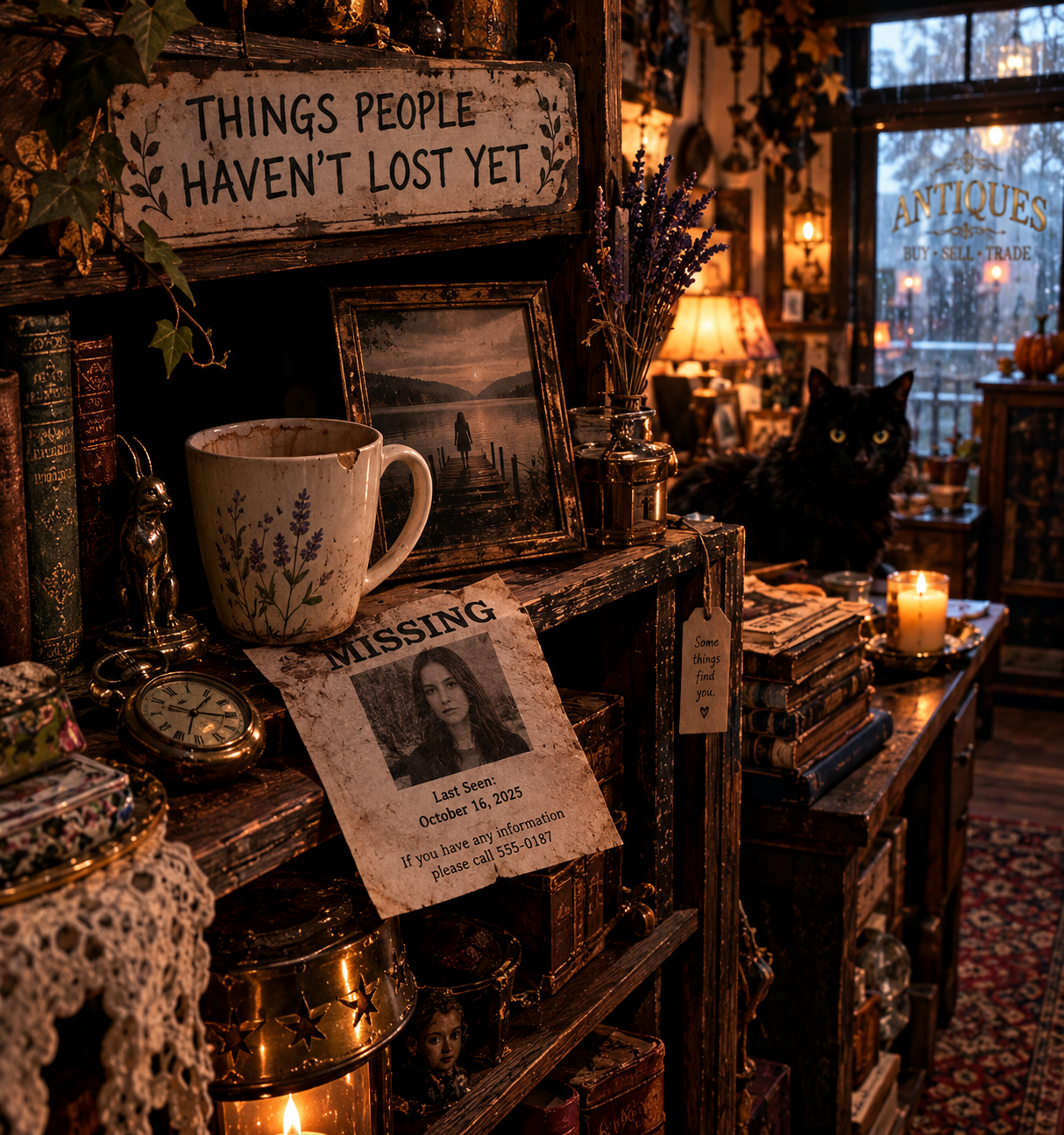
Toward the back of the store, you notice a narrow shelf with a handwritten sign:
THINGS PEOPLE HAVEN'T LOST YET
Naturally, you investigate.
The first thing you recognize is your favorite coffee mug.
The same little chip near the handle. The same stain on the bottom.
Except your mug was sitting on your kitchen counter when you left home.
Beside it is a photograph of you standing somewhere you've never been.
And underneath the photograph?
A missing-person flyer.
Your face.
Your name.
Tomorrow's date.
When you turn around to ask the shopkeeper about it, the black cat is sitting in front of the exit.
And the shopkeeper says, "Oh, good. You've finally found your things."
Why Ordinary Objects Make Excellent Horror
One of the things I love about horror is that you don't need a complicated monster to make a reader uncomfortable.
Sometimes all you need is an everyday object that doesn't belong where it is.
A familiar coffee mug in a strange shop is unsettling because it raises questions.
How did it get there? Who brought it? Why does the shopkeeper seem to know something you don't?
And why is there a missing-person flyer dated tomorrow?
That's the power of using familiar objects in horror. Readers recognize them, understand their significance, and immediately notice when something isn't right.
Three Ways to Make Familiar Objects Creepy
1. Put them somewhere they shouldn't be.
A childhood toy appears inside a locked house. A wedding ring turns up in a stranger's pocket. A photograph shows someone who wasn't there.
2. Give them knowledge they shouldn't have.
A diary describes tomorrow's events. An old answering machine plays a message from someone who hasn't called yet.
3. Make their appearance personal.
The object isn't just strange. It belongs to your character, carries an important memory, or reveals something they desperately wanted to forget.
The more personal the object, the more unsettling its appearance can become.
Your Writing Challenge
Write a 300–600-word horror story inspired by the antique shop.
Think about these questions:
Why does the shop collect things people haven't lost yet?
Can the future be changed?
What happens if someone steals an object from the shelf?
Does the shopkeeper help people, or is the shop part of the reason they disappear?
Here's an extra challenge: Make your story frightening without showing a single monster.
Let the objects, atmosphere, and unanswered questions do the work.
Join the October Horror Writing Challenge
Throughout October, I'm sharing visual horror prompts to encourage writers to experiment, explore strange ideas, and get a little creative.
You don't need to write a masterpiece. You don't even need to finish the story in one sitting.
Sometimes the best thing you can do for your writing is follow an idea and see where it leads.
If you enjoy creepy writing prompts, explore the rest of my October challenge here at Savvy Word Slinger.
And if you'd like more personal conversations about writing, books, life, and whatever strange things catch my attention, come join me on Substack.
Just be careful what you bring home from the antique shop.
Some things really should stay on the shelf.

The Harvest Table: A Creepy Fall Writing Prompt for Horror Lovers
There's something about October that makes perfectly ordinary things feel a little suspicious.
An empty chair. A candle burning in a window. A beautifully decorated dinner table sitting in the middle of nowhere.
Okay, that last one would probably concern me regardless of the season.
But that's what I love about horror. Sometimes the creepiest stories start with something completely normal.
Today's visual horror prompt takes us to a small town with a rather questionable autumn tradition.
The Horror Writing Prompt
Every October, the townspeople gather beneath an enormous oak tree to prepare a harvest dinner.
They set the table with fresh bread, roasted vegetables, homemade pies, and dozens of candles.
Every chair is reserved for someone who has disappeared from the town.
Nobody eats the food.
Nobody stays to watch.
And nobody talks about what happens after midnight.
This year, you discover an additional chair at the table.
There's a handwritten place card resting on the plate.
It has your name on it.
Well, that's unfortunate.

Why This Makes a Great Horror Story
I love horror that takes something comforting and twists it just enough to make us uncomfortable.
A harvest dinner normally means family, tradition, and community.
But what happens when that same tradition becomes something nobody wants to discuss?
You don't need buckets of blood or a monster hiding behind every tree. Sometimes the suggestion that something terrible might happen is enough.
The reader's imagination can do an impressive amount of damage all by itself.
Your Writing Challenge
Write a 300–600-word horror story inspired by the harvest table.
Consider these questions:
Who started this tradition, and why?
What happened to the missing townspeople?
Who put your name on the table?
What happens if you refuse to sit down?
You can make your story supernatural, psychological, funny, or downright terrifying.
Personally, I'd be suspicious of the pie.
Join the October Horror Challenge
Throughout October, I'm sharing visual horror writing prompts to help writers explore strange ideas and create something new.
You don't need to be an experienced writer. You just need a little curiosity and a willingness to ask, "What if?"
Explore more prompts here at Savvy Word Slinger, and come join me on Substack for personal conversations about writing, books, life, and all the weird things that make the world interesting.
Bring coffee.
And maybe don't accept dinner invitations from strangers in the woods.

The Sewing Box Wasn’t For Sewing
I have questions about whoever decided a cookie tin was the best place to keep sewing supplies.
Mostly, why would you do that to someone?
You see the tin. You get excited. You open it, and instead of cookies, you get thread, three loose buttons, and a needle waiting to ruin your afternoon. Betrayal with a lid.
But for today’s horror prompt, we’re going to give that tin something worse to hide.
Picture an old sewing box sitting on a kitchen table. Maybe it belonged to your character’s grandmother. Maybe they bought it at an estate sale because it looked useful, and apparently that’s how we’re making terrible decisions today.
Inside are the usual things. Tangled thread. Little scissors. A measuring tape that won’t roll up right. There’s even a half-finished repair, a few stitches holding a torn piece of fabric together.
Then your character lifts the tray out.
Underneath is a row of human teeth.
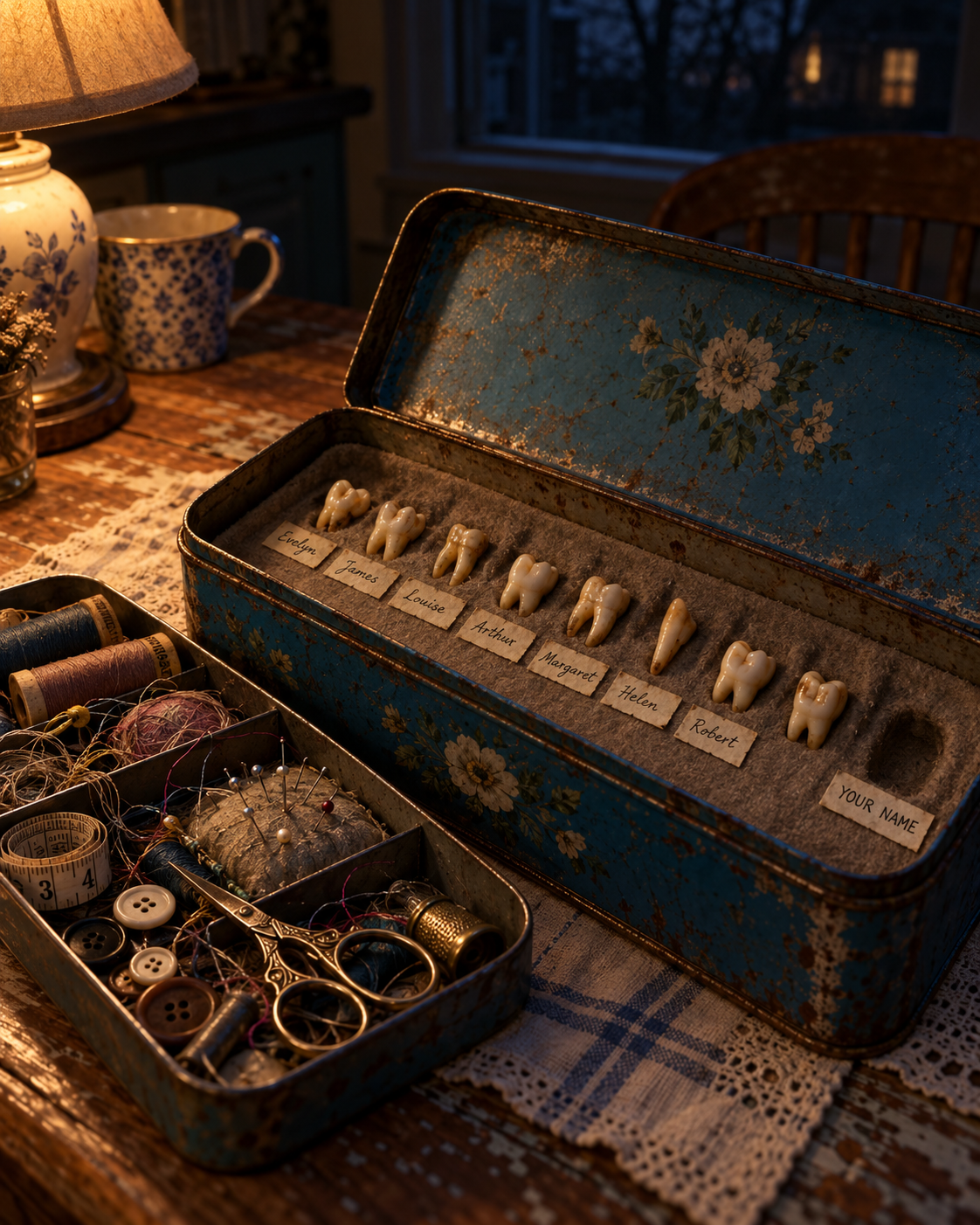
Except each tooth has a name written beside it. Some names are crossed out. Others have dates. And there, at the end of the row, is your character’s name.
Their space is still empty.
Today’s horror writing prompt:
While sorting through an old sewing box, you find human teeth arranged beneath the tray, each labeled with a name. The last label has your name on it. That night, you wake to the sound of scissors opening and closing beside your bed.
What I like about this one is how small it starts.
Nobody has to enter an abandoned hospital or decide that exploring a basement alone sounds fun. Your character can be sitting at their own kitchen table, sorting through somebody else’s stuff, thinking about what to keep and what to throw away.
Then they find something they cannot explain.
And now they have to decide what to do with it.
Personally, I would like to think I’d leave. But I also know I’d probably stare at those teeth for a minute, trying to convince myself there was a reasonable explanation.
Dental school? A very strange collection? Some family thing nobody thought to mention?
The name would be harder to explain.
Especially if it was written in familiar handwriting.
That’s where you can start making this personal. Who owned the box? Did they love your character? Did they spend years quietly repairing their clothes? Maybe your character remembers falling asleep beside them while they sewed.
Now that memory feels different.
You don’t have to explain everything immediately. Let your character examine the box. Let them notice the thread caught around one tooth, or a date that matches the day somebody disappeared. Give them enough information to keep looking when they really should put the lid back on.
And please, use the sounds.
Scissors have such a specific sound. That little metallic snip is harmless when someone is trimming thread across the room.
At two in the morning, beside your pillow?
Absolutely freaking not.
Maybe your character keeps their eyes shut. Maybe they can feel somebody lifting a strand of their hair. Maybe a voice they haven’t heard in years tells them to hold still.
There’s also the question of what the sewing supplies are actually repairing. Those teeth might be materials. The names might be instructions. Your character could find a scrap of fabric that looks ordinary until they turn it over.
I’ll let you decide how unpleasant that gets.
Start with the box. Give us the moment your character finds their name, and let us stay with them long enough to hear the first snip.
Now I’m going to need everyone to check their cookie tins.
Preferably during daylight.