The Lost and Found: A Creepy Antique Shop Horror Writing Prompt
31 Days of Visual Horror Prompts — Day 15
I love antique shops.
There's something wonderful about wandering through shelves of old books, dusty furniture, strange little figurines, and objects that probably have some interesting stories attached to them.
Of course, there's also the possibility that one of those objects is cursed.
But that's part of the charm, right?
Today's horror writing prompt takes something ordinary—a little antique shop—and turns it into a place where the future might already be waiting.
Today's Visual Horror Prompt: The Lost and Found
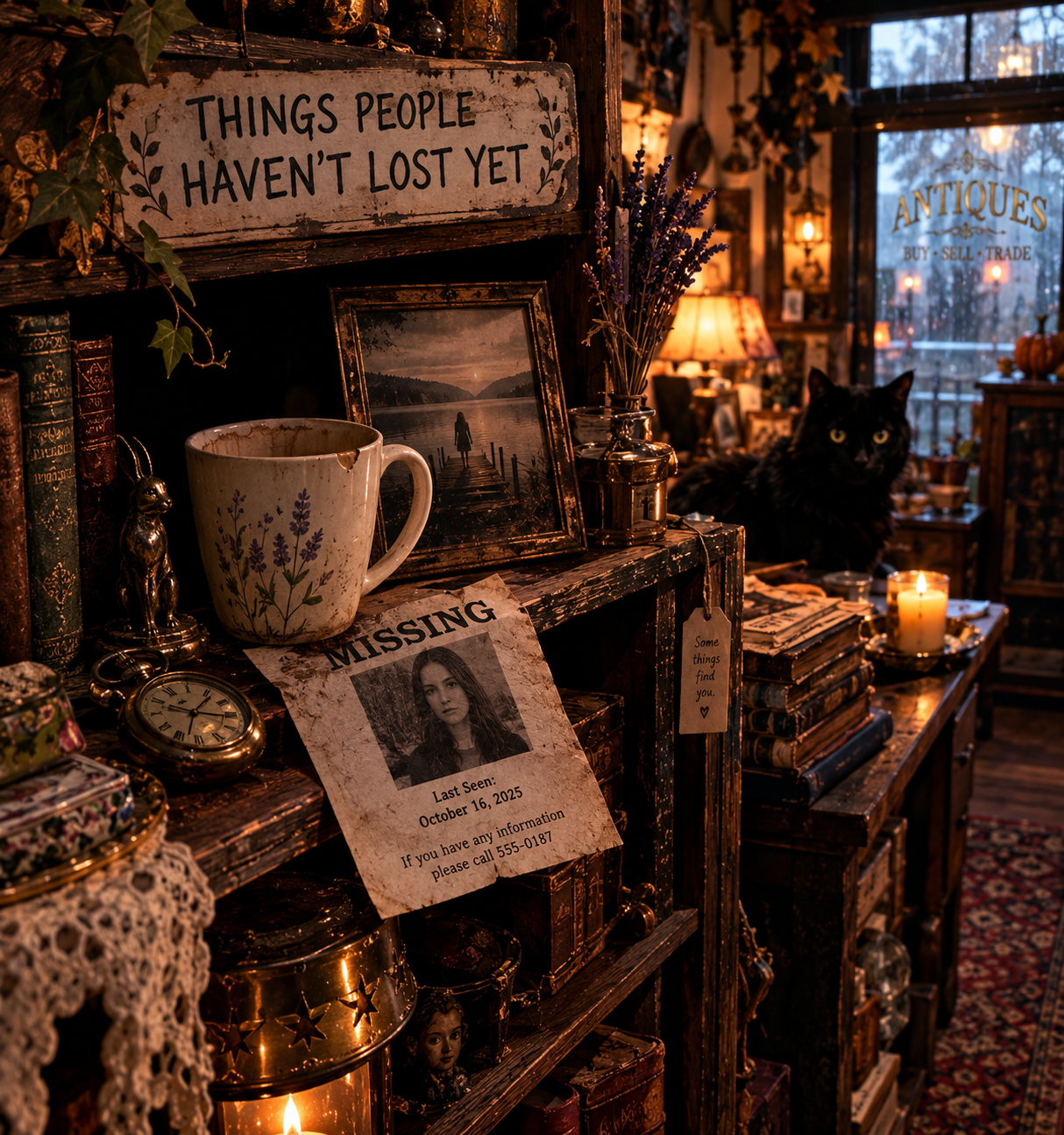
You wander into a tiny antique shop on a rainy October afternoon.
The place smells like old paper, cinnamon, and furniture polish. A black cat watches you from behind the counter while an elderly shopkeeper sorts through a box of photographs.
Toward the back of the store, you notice a narrow shelf with a handwritten sign:
THINGS PEOPLE HAVEN'T LOST YET
Naturally, you investigate.
The first thing you recognize is your favorite coffee mug.
The same little chip near the handle. The same stain on the bottom.
Except your mug was sitting on your kitchen counter when you left home.
Beside it is a photograph of you standing somewhere you've never been.
And underneath the photograph?
A missing-person flyer.
Your face.
Your name.
Tomorrow's date.
When you turn around to ask the shopkeeper about it, the black cat is sitting in front of the exit.
And the shopkeeper says, "Oh, good. You've finally found your things."
Why Ordinary Objects Make Excellent Horror
One of the things I love about horror is that you don't need a complicated monster to make a reader uncomfortable.
Sometimes all you need is an everyday object that doesn't belong where it is.
A familiar coffee mug in a strange shop is unsettling because it raises questions.
How did it get there? Who brought it? Why does the shopkeeper seem to know something you don't?
And why is there a missing-person flyer dated tomorrow?
That's the power of using familiar objects in horror. Readers recognize them, understand their significance, and immediately notice when something isn't right.
Three Ways to Make Familiar Objects Creepy
1. Put them somewhere they shouldn't be.
A childhood toy appears inside a locked house. A wedding ring turns up in a stranger's pocket. A photograph shows someone who wasn't there.
2. Give them knowledge they shouldn't have.
A diary describes tomorrow's events. An old answering machine plays a message from someone who hasn't called yet.
3. Make their appearance personal.
The object isn't just strange. It belongs to your character, carries an important memory, or reveals something they desperately wanted to forget.
The more personal the object, the more unsettling its appearance can become.
Your Writing Challenge
Write a 300–600-word horror story inspired by the antique shop.
Think about these questions:
Why does the shop collect things people haven't lost yet?
Can the future be changed?
What happens if someone steals an object from the shelf?
Does the shopkeeper help people, or is the shop part of the reason they disappear?
Here's an extra challenge: Make your story frightening without showing a single monster.
Let the objects, atmosphere, and unanswered questions do the work.
Join the October Horror Writing Challenge
Throughout October, I'm sharing visual horror prompts to encourage writers to experiment, explore strange ideas, and get a little creative.
You don't need to write a masterpiece. You don't even need to finish the story in one sitting.
Sometimes the best thing you can do for your writing is follow an idea and see where it leads.
If you enjoy creepy writing prompts, explore the rest of my October challenge here at Savvy Word Slinger.
And if you'd like more personal conversations about writing, books, life, and whatever strange things catch my attention, come join me on Substack.
Just be careful what you bring home from the antique shop.
Some things really should stay on the shelf.